
InsightsAnimation
From sketch to final: bringing a Dưa Nhỏ scene to life
Every finished frame starts as a rough sketch. A look at one shot from the Dưa Nhỏ animation, from first sketch to final 3D render, and what each stage of production is for.
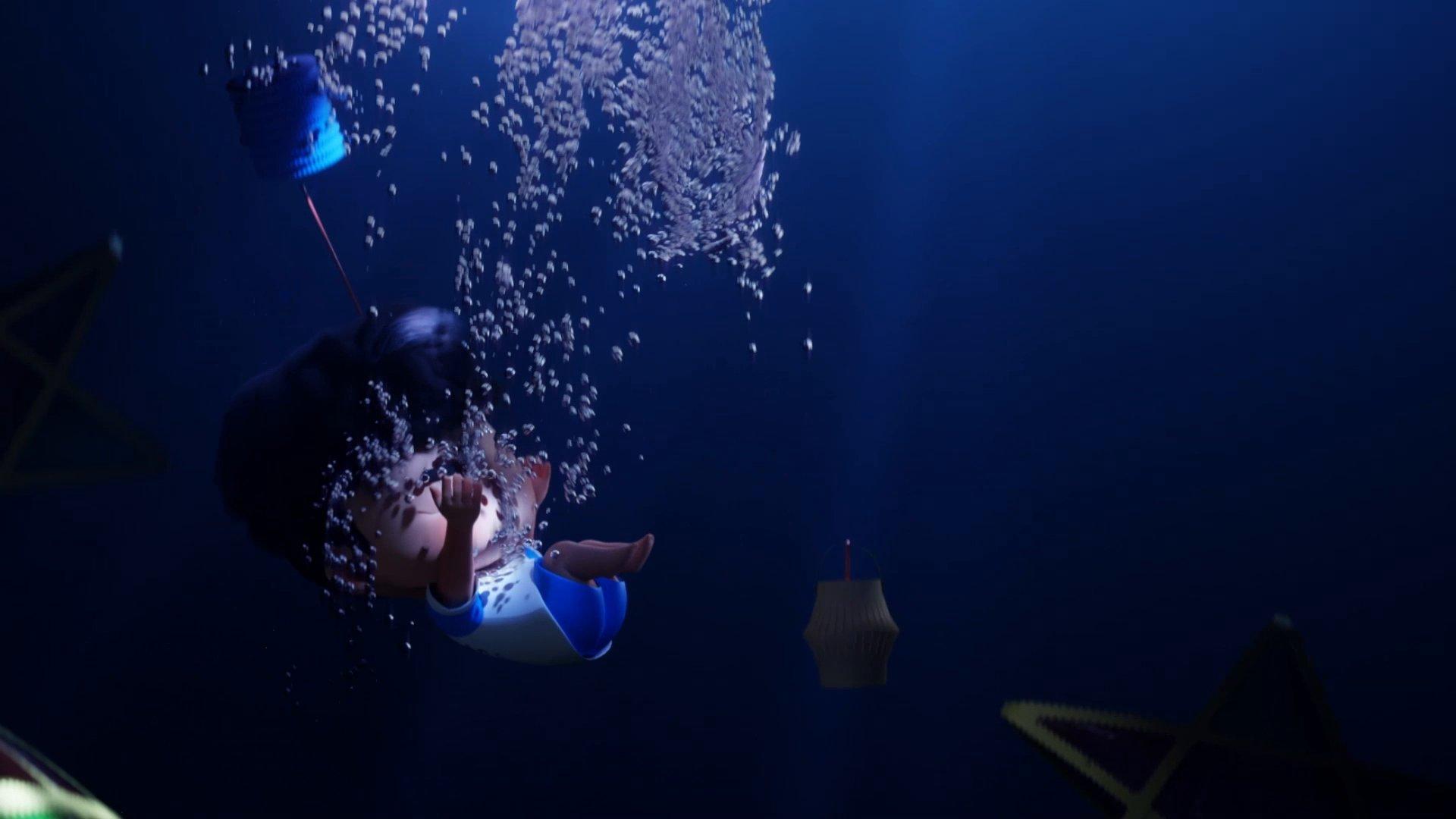
The finished frame is the part audiences see: soft light on the grass, a potted flower, and Dưa Nhỏ and his friends gathered around it. Long before that render existed, the same shot was a handful of quick lines in a sketch. Putting the two side by side is a good way to see how animation is built.
What the sketch is for
The sketch is deliberately rough. Its job is not to look finished but to settle the questions that are expensive to change later: where the camera sits, who is in frame, how the characters relate to each other and whether the moment reads clearly.
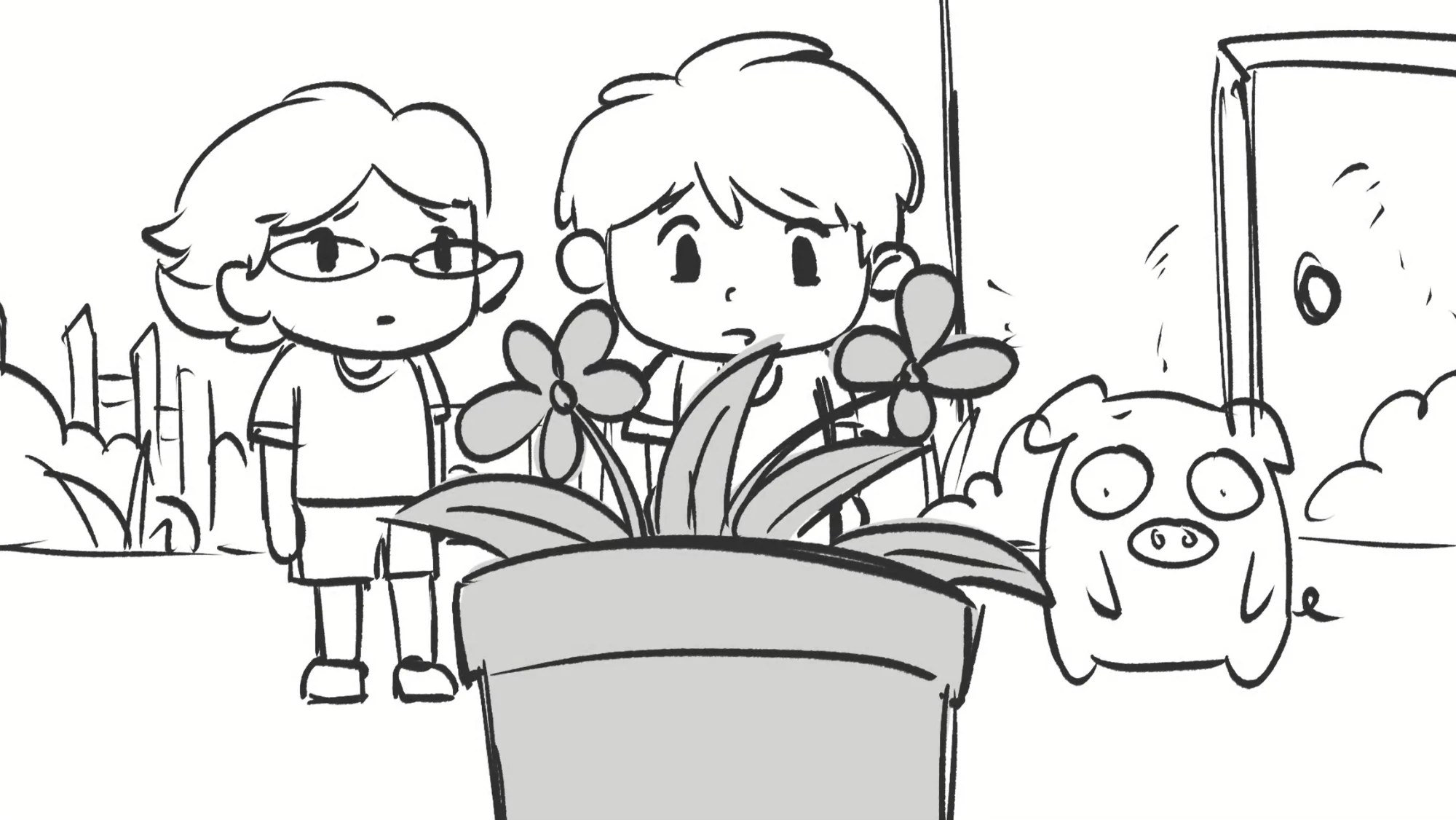
In this shot, the sketch already sets the composition that survives to the end. The flower sits in the foreground, the two children stand behind it and the pig waits to one side. The feeling is there too: a worried glance, a pause before anyone speaks. Those choices carry the emotion of the scene, and they are easy to adjust while they are still drawings.
From sketch to screen
Once the sketch is agreed, the shot moves into production: building and texturing the characters and set, animating the performance, then lighting and rendering. Each stage adds detail, but the decisions made in the sketch are what hold the scene together.
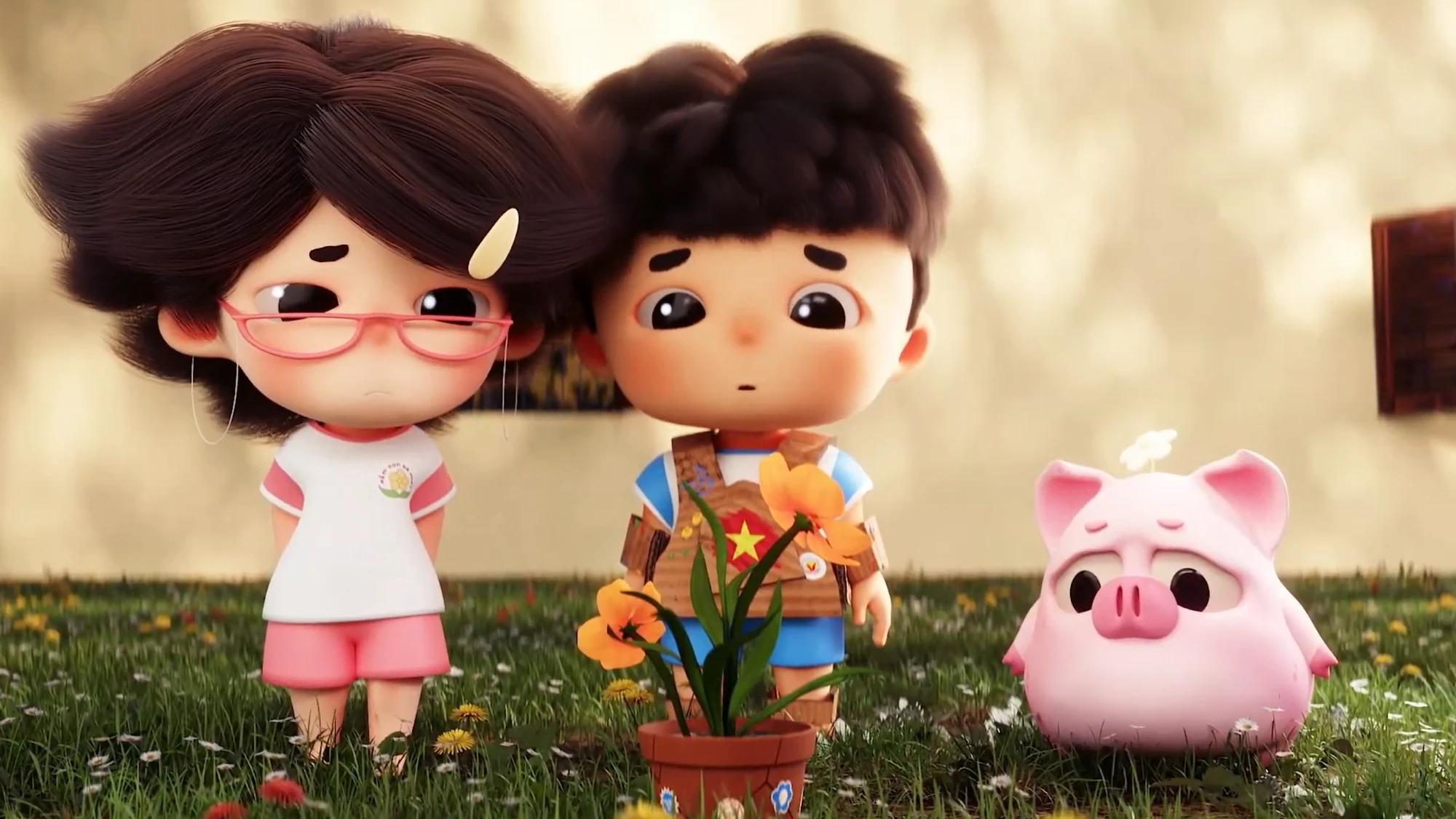
The final frame keeps the sketch's staging. What changes is everything that makes it feel real: materials, light and depth, along with the small details of character design, like the hand-drawn cardboard armour Dưa Nhỏ wears.
Why it matters for IP
For an original character, animation is often where audiences meet them first. Working rough first protects both the story and the budget. It also gives everyone involved, from creative teams to partners, a shared view of the scene early on, while changes are still easy.
That is how we approach animation at BAMU Studio, for our own characters and for our partners' IP. You can compare the sketch and the final frame interactively in our Dưa Nhỏ Animation case study.